

Verklärung des Herrn: Festtag, Ikonografie und Traditionen
6. August – die Verklärung des Herrn. Christus offenbart sein unerschaffenes Licht auf dem Berg Tabor, eine der leuchtendsten Szenen der Ikonographie.

Das Fest der Verklärung des Herrn
Am sechsten August feiert die Orthodoxe Kirche die Verklärung des Erlösers – jenen Tag, an dem Christus Petrus, Jakobus und Johannes auf den Berg Tabor mitnahm und, wie das Evangelium berichtet, „vor ihnen verklärt wurde: Sein Angesicht leuchtete wie die Sonne, und seine Kleider wurden weiß wie das Licht“ (Matthäus 17,2). Mose und Elija erschienen an seiner Seite; das Gesetz und die Propheten standen bei dem Einen, den sie vorausgesagt hatten, und aus der überschattenden Wolke erklang die Stimme des Vaters: „Dies ist mein geliebter Sohn, an dem ich Wohlgefallen gefunden habe; auf ihn sollt ihr hören.“
Die drei Jünger fielen auf ihr Angesicht, und Petrus – nicht wissend, was er sagen sollte – schlug vor, drei Hütten zu bauen, damit der Augenblick verweile. Er verweilte nicht. Doch die Kirche hat nie aufgehört, zu ihm zurückzukehren, denn was die Jünger auf dem Tabor sahen, war kein Wunder, das an Christus vollzogen wurde. Ihm wurde nichts hinzugefügt. Der Schleier wurde für einen Moment zurückgezogen, und ihnen wurde die Gnade zuteil, das zu sehen, was schon immer da war.
Bis zum vierten Jahrhundert wurde die Verklärung kurz vor Ostern gefeiert, zeitlich nah an den Ereignissen, die sie vorwegnimmt – das Kreuz, das der Herr seinen Jüngern gerade vorausgesagt hatte, und die Herrlichkeit der Auferstehung. Das Datum wurde nach der Weihe der Verklärungskirche auf dem Berg Tabor, die von der heiligen Helena erbaut wurde, verlegt, und von da an setzte sich der sechste August durch. Vierzig Tage später, am vierzehnten September, feiert die Kirche die Erhöhung des Heiligen Kreuzes – das gleiche vierzigtägige Intervall, das im Bericht des Evangeliums Tabor von Golgatha trennt und im Kalender bewahrt bleibt.
Das Fest steht im Mittelpunkt der orthodoxen Theologie des göttlichen Lichts. Im vierzehnten Jahrhundert verteidigte der heilige Gregor Palamas gegenüber Barlaam von Kalabrien die Überzeugung, dass das Licht vom Tabor kein erschaffener Glanz, sondern die unerschaffene Energie Gottes sei – dass Gott, in seinem Wesen unergründlich, sich in seinen Energien wahrhaftig erkennen lässt. Was die Apostel mit eigenen Augen sahen, ist daher die Verheißung dessen, was jeden Christen erwartet: nicht bloß Vergebung, sondern Verklärung.
Das Apolytikion des Festes
Μετεμορφώθης ἐν τῷ ὄρει Χριστὲ ὁ Θεός, δείξας τοῖς Μαθηταῖς σου τὴν δόξαν σου, καθὼς ἠδύναντο. Λάμψον καὶ ἡμῖν τοῖς ἁμαρτωλοῖς, τὸ φῶς σου τὸ ἀΐδιον, πρεσβείαις τῆς Θεοτόκου, φωτοδότα δόξα σοι.
„Du wurdest verklärt auf dem Berg, o Christus, unser Gott, und hast deinen Jüngern deine Herrlichkeit gezeigt, soweit sie es zu fassen vermochten. Lass auch uns Sündern dein ewiges Licht leuchten, durch die Fürbitten der Gottesgebärerin. O Lichtspender, Ehre sei dir.“
In der byzantinischen Ikonographie
Jedes Element einer orthodoxen Ikone trägt eine Bedeutung in sich – die Farben der Gewänder, die Haltung der Hände, die gehaltenen Gegenstände, der Goldgrund, der für das unerschaffene Licht steht.
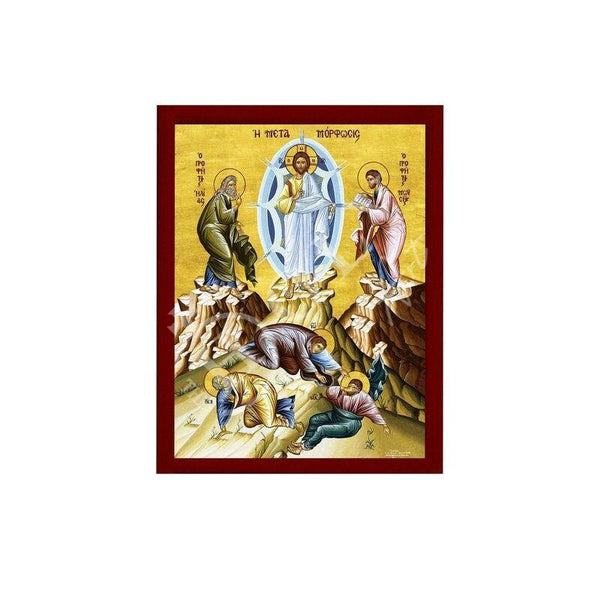
Die Verklärung ist eines der wenigen Themen, bei denen die Ikone das Licht selbst malen muss, und die byzantinischen Ikonographen lösten dieses Problem mit einem Kunstgriff, der fast nirgendwo sonst zu finden ist: der Mandorla, einer mandelförmigen oder kreisrunden Glorie, die Christus auf dem Gipfel umgibt. Ihre Schichten werden bezeichnenderweise zur Mitte hin dunkler statt heller – das „göttliche Dunkel“ des Dionysius Areopagita, das bewusste Eingeständnis, dass je näher man Gott kommt, desto weniger das menschliche Auge es begreifen kann. Aus der Mandorla schießen drei, sechs oder acht Strahlen hinab auf die Jünger.
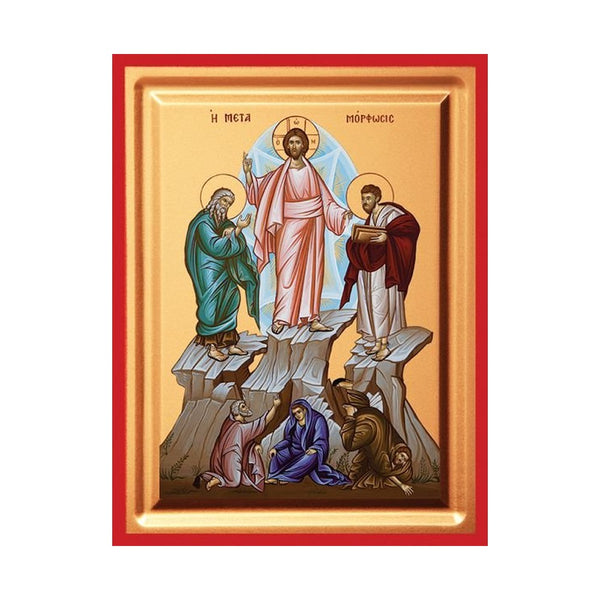
Die Komposition wird vertikal gelesen. Christus steht oben in weißen oder goldenen Gewändern, seine rechte Hand segnet, die linke hält eine Schriftrolle. Zu seiner Rechten steht Mose mit den Gesetzestafeln, der für die auferweckten Toten steht; zu seiner Linken Elija, der Prophet, der lebendig im feurigen Wagen entrückt wurde. Unten im unteren Register sind die drei Jünger in ihrer Bestürzung dargestellt: Petrus oft seine Augen schützend oder nach oben deutend, Jakobus fallend und Johannes – traditionell der Jüngste – kopfüber den Hang hinabgestürzt. Ihre taumelnden Haltungen sind kein zeichnerisches Versagen, sondern das eigentliche Ziel der Ikone: Die Apostel werden in Bewegung und Verwirrung gemalt, während Christus in absoluter Stille dargestellt ist. Der Tabor selbst wird als stilisierte Felsgipfel wiedergegeben, drei an der Zahl, die die drei Hütten widerspiegeln, die Petrus vorschlug.
Die Werkstätten unterscheiden sich in den Details – einige Varianten der kretischen Schule fügen an den Rändern den Auf- und Abstieg vom Berg hinzu und zeigen die Jünger, wie sie auf der einen Seite hinaufsteigen und auf der anderen zurückkehren; Ikonen der mazedonischen Schule bevorzugen oft eine kargere Mandorla mit schärferen Strahlen. Der Goldgrund, der fast immer vorhanden ist, ist keine Dekoration. Er ist dasselbe unerschaffene Licht, das den Raum ausfüllt, in dem die gesamte Szene stattfindet.
Zum Beispiel können Sie bei unserer Serigraphie-Ikone der Verklärung auf geschnitztem Holz die traditionelle Komposition in der klassischen byzantinischen Art sehen.
Traditionen und Bräuche
Die Verklärung ist einer der hellsten Tage einer anspruchsvollen Fastenzeit. Das strenge Fasten der ersten fünfzehn Augusttage – das Entschlafungsfasten – wird am sechsten gelockert, an dem Fisch erlaubt ist, und Familien in ganz Griechenland begehen den Tag nach zwei Wochen Enthaltsamkeit mit einer festlichen Tafel.
Auf dem Land war das Fest schon immer der Tag der ersten Weintrauben. Die ersten Trauben der diesjährigen Ernte werden am Morgen des sechsten Tages zur Kirche gebracht, um mit einem besonderen Gebet gesegnet und dann an die Gemeinde verteilt zu werden – die Erstlinge des Jahres werden angeboten, bevor sie verzehrt werden, und die Reben der neuen Ernte werden durch den Segen geweiht, bevor die Weinlese beginnt. In vielen Dörfern würde niemand vor diesem Morgen die neuen Trauben kosten.
Der sechste August beendet auch die Drimes – die ersten sechs Tage des Monats, von denen man im Volksglauben annahm, dass sie von unerklärlichen Kräften beherrscht werden. Die Tradition warnt davor, an diesen Tagen im Meer zu schwimmen oder Wäsche zu waschen, da diese angeblich ruiniert würde; das Volksheilmittel besteht darin, einen Nagel ins Wasser zu werfen, um die Drimes zu „festnageln“ und zu neutralisieren. Der Brauch bewahrt wahrscheinlich eine ältere, praktische Erinnerung an die plötzlichen Böen und harten Meltemi-Winde, die das Meer im frühen August tückisch machen.
Der Tag ist auch Namenstag für alle, die Sotiris, Sotiria oder Metamorfosi heißen, und das Fest vieler Klöster und Kirchen, die der Verklärung (Metamorphosis) geweiht sind – am bekanntesten das große Kloster auf dem Berg Tabor selbst und die Metamorphosis in Meteora.
Viele Familien markieren den Tag, indem sie eine Ikone in die Gebetsecke des Hauses stellen – wie etwa diese Metamorphosis Jesus Christus-Ikone der Verklärung – und ein ewiges Licht davor anzünden.
Eine Ikone als Geschenk auswählen
Für Namenstage und Feiertage ist eine handgefertigte Ikone ein Geschenk, das jedes andere überdauert. Die Größen reichen von kleinen Schreibtischikonen bis hin zu großen Wandbildern, sodass für jedes Zuhause und jedes Budget das Richtige dabei ist.
Ein paar praktische Dinge, die Sie vor der Auswahl wissen sollten:
Größe. Unsere Verklärungs-Ikonen reichen von etwa 7x9 cm bis zu 50x70 cm. Als Faustregel gilt: 7–11 cm große Stücke sind für den Schreibtisch, das Auto, den Nachttisch oder als Taufgeschenk; 15–21 cm ist die klassische Größe für eine Gebetsecke zu Hause, groß genug, um sie zu verehren, ohne den Raum zu dominieren; 30 cm und mehr gehören an die Wand, in den Flur oder über ein Ikonostasen-Regal. Wenn die Ikone in eine bestehende Gebetsecke kommen soll, messen Sie zuerst das Regal – Ikonen werden fast immer eine Nummer kleiner bestellt, als man denkt.
Technik und Material. Die Serigraphie auf geschnitztem Holz ergibt eine taktile, erhabene Oberfläche und eine warme Tiefe, gedruckt mit UV-beständigen Farben, die nicht verblassen; Lithographie auf Holz mit einer doppelten Lackschicht und handgefertigter künstlicher Alterung reproduziert das Aussehen eines alten byzantinischen Brettes sehr getreu; mit Silber belegte Ikonen strahlen eine Förmlichkeit aus, die zu Hochzeiten und großen Jubiläen passt; Blattgold trägt das Licht des Festes am wörtlichsten, was es zu einer natürlichen Wahl für dieses besondere Thema macht.
Passend zum Anlass. Für eine Taufe ist eine kleine Ikone des Schutzheiligen des Kindes die traditionelle Wahl, oft begleitet von kleinen Gastgeschenk-Ikonen. Für eine Hochzeit ein größeres Stück für das neue Zuhause des Paares – Christus und die Gottesgebärerin als Paar sind das klassische Geschenk. Für einen Namenstag eine Ikone des Festes selbst. Für einen Hausaltar denken Sie an die gesamte Ecke und nicht nur an das einzelne Stück: eine Ikone, eine Öllampe und ein Weihrauchbrenner zusammen sind ein weitaus besseres Geschenk als eine größere Ikone allein.
Jedes Stück wird in unserer Werkstatt in Griechenland auf Bestellung gefertigt, planen Sie also einige Tage für die Produktion vor dem Versand ein; wir versenden weltweit, und für Kunden in den Vereinigten Staaten sind Zölle und Einfuhrsteuern bereits bezahlt, sodass bei der Lieferung keine zusätzlichen Kosten anfallen.
Ikonen für dieses Fest
Stöbern Sie in der gesamten Kollektion →
Jede Ikone in unserer Werkstatt wird in Griechenland von Hand nach byzantinischer Tradition gefertigt und weltweit versandt. Wenn Sie Fragen zu einem bestimmten Heiligen oder einer Größe haben, helfen wir Ihnen immer gerne weiter.